Gulls are tricky to identify. Not only are the birds largely similar, but it takes multiple years for the birds to reach mature plumage and the plumage differs by age. To make things more fun, there can be a fair amount of variation within age groups.
For most of our birds, we learn male, female, immature, and possibly nonbreeding. If you live in an area where gulls are common, you would have a motivation to study and get good with identification. Here in the Wichita Falls, TX area, we only get gulls in the winter and 95% or more are ring-billed gulls. Consequently, many locals identify gulls as a "ring-billed gull" or "not a ring-billed gull." We really have to have time to study a gull to have a hope of making an accurate identification--and we are hoping we have adult plumage to work with. Many of us have more "gull species" than clearly identified species on trip lists.
Princeton University Press sent me a review copy of Gulls Simplified: A Comparative Approach to Identification, by Pete Dunne and Kevin Karlson. What makes it especially useful are the numerous pictures (330 color photos). The species accounts are focused on identification which is the purpose of the book. There are lots of pictures with a discussion of what field marks to look for and where you may get confused with another species. There isn't a lot of text, but there is some commentary on those traits that experienced birders notice that can make a difference in deciding between two species. For example, the Great Black-backed gull is referred to "chestier" than a Herring Gull and its gait is referred to as a "waddling sailor's gait." To a non-birder, this may not seem to be anything other than literary description, but it is precisely these things that allow a birder to identify similar species quickly in the field.
Overall, this is an excellent book to hone your gull identification skills. It isn't a book to take into the field, but a great supplemental reference to use when you get back to the house with your field notes and/or photos.
The list price for this book is $24.95. It is also available for less from other outlets (the least expensive I found in paperback was Barnes and Noble for $17.21). The least expensive version is the Kindle edition, but I just don't care for my bird books in ebook format. But that is my preference. If you like ebooks, the Kindle version is $15.72 (and of course, you can have it immediately.)
A blog about birding in Texas. Includes information about birds, little known birding places, and the daily joys and disappointments of a birder. Occasional information about other nature-related topics and events.
Showing posts with label Princeton University Press. Show all posts
Thursday, January 3, 2019
Thursday, September 27, 2018
Book Review: How to Be an Urban Birder
I very much enjoyed the book, How to Be an Urban Birder by David Lindo, sent to me by Princeton University Press for review.
But before I even opened the book and read the first word, do you know what caught my eye? The author, David Lindo, is not white. That seems wrong to notice that first, but at least here in the U.S., birding is predominantly a hobby enjoyed by white people. I am not sure why that is as birding is one nature activity you can do anywhere, but it seems to be a hobby by those who can get out of town into the countryside. Which is unfortunate. Those of us who bird know how endlessly fascinating birds are, and I would love to see more people enjoy the hobby and gain a greater appreciation for the creatures that share our world.
This book is a celebration of birds and birding in places we don't think of as good birding locations--our urban environment. If you ask someone what birds you are likely to see in a city, the most likely responses are pigeons, starlings, house sparrows, and similar birds. But I have been in many large cities and seen some excellent birds. It's a matter of looking. Lots of photos of birds seen by the author in his urban environment show how much more is possible.
And that really is the point of this book. We can introduce people to birds and nature anywhere, building an appreciation of the environment they might not otherwise have. As more and more people live in urban areas, it becomes harder to connect people to nature. As David Lindo says, "If we can learn about the importance of wildlife conservation in our cities then we will understand the connection in the general web of life on this planet, enabling us to reach out and strive to protect the rest of the world's fauna and flora and ultimately, ourselves."
Mr. Lindo is based in England, and that was much of the fun for me. I lived in England for a few years, so it was fun to read some of the expressions I had forgotten and to see pictures of some of the birds that were so familiar when we lived there, but I haven't seen since we returned to the U.S.
This is a good book for a new birder. He writes about field guides, binoculars, telescopes, cameras and all of the other paraphernalia birders tend to accumulate. There is a chapter on creating a more bird-friendly yard. Scattered throughout are examples of the things many cities are doing to improve the urban environment for birds, wildlife, and people. Whether a new birder or one more experienced, this is an interesting read.
You can find this book on Amazon for $15.45 or from Princeton University Press for $18.95.
But before I even opened the book and read the first word, do you know what caught my eye? The author, David Lindo, is not white. That seems wrong to notice that first, but at least here in the U.S., birding is predominantly a hobby enjoyed by white people. I am not sure why that is as birding is one nature activity you can do anywhere, but it seems to be a hobby by those who can get out of town into the countryside. Which is unfortunate. Those of us who bird know how endlessly fascinating birds are, and I would love to see more people enjoy the hobby and gain a greater appreciation for the creatures that share our world.
This book is a celebration of birds and birding in places we don't think of as good birding locations--our urban environment. If you ask someone what birds you are likely to see in a city, the most likely responses are pigeons, starlings, house sparrows, and similar birds. But I have been in many large cities and seen some excellent birds. It's a matter of looking. Lots of photos of birds seen by the author in his urban environment show how much more is possible.
And that really is the point of this book. We can introduce people to birds and nature anywhere, building an appreciation of the environment they might not otherwise have. As more and more people live in urban areas, it becomes harder to connect people to nature. As David Lindo says, "If we can learn about the importance of wildlife conservation in our cities then we will understand the connection in the general web of life on this planet, enabling us to reach out and strive to protect the rest of the world's fauna and flora and ultimately, ourselves."
Mr. Lindo is based in England, and that was much of the fun for me. I lived in England for a few years, so it was fun to read some of the expressions I had forgotten and to see pictures of some of the birds that were so familiar when we lived there, but I haven't seen since we returned to the U.S.
This is a good book for a new birder. He writes about field guides, binoculars, telescopes, cameras and all of the other paraphernalia birders tend to accumulate. There is a chapter on creating a more bird-friendly yard. Scattered throughout are examples of the things many cities are doing to improve the urban environment for birds, wildlife, and people. Whether a new birder or one more experienced, this is an interesting read.
You can find this book on Amazon for $15.45 or from Princeton University Press for $18.95.
Wednesday, August 17, 2016
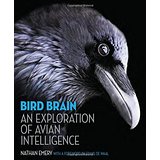
Book Review: Bird Brain--An Exploration of Avian Intelligence
Princeton University Press sent me another winner for review. Nathan Emery's Bird Brain: An Exploration of Avian Intelligence is thoroughly enjoyable throughout.
Historically, when someone calls us a "birdbrain," they are not being complimentary. We may need to rethink that, at least for some birds.
This book is a fascinating exploration of how birds learn, think and feel. The book looks at the structure of the avian brain and the abilities it provides to our feathered neighbors. It does this without being stuffy or beyond the reach of the general public with an interest in birds. Short essays on each topic allow a person to explore the book in snippets or to skip around the book to read whatever catches your eye.
For me, the geek, I really enjoyed reading how the experiments were structured to give us insight on how birds "think." I might have liked a little more detail on that, but I can always look that up. For most people, what is presented is enough. Beautiful photography and interesting illustrations add to the overall appeal of the book.
Any bird lover would love to have this book in his/her library. $29.95 from Princeton University Press or $23.32 on Amazon.
Historically, when someone calls us a "birdbrain," they are not being complimentary. We may need to rethink that, at least for some birds.
This book is a fascinating exploration of how birds learn, think and feel. The book looks at the structure of the avian brain and the abilities it provides to our feathered neighbors. It does this without being stuffy or beyond the reach of the general public with an interest in birds. Short essays on each topic allow a person to explore the book in snippets or to skip around the book to read whatever catches your eye.
For me, the geek, I really enjoyed reading how the experiments were structured to give us insight on how birds "think." I might have liked a little more detail on that, but I can always look that up. For most people, what is presented is enough. Beautiful photography and interesting illustrations add to the overall appeal of the book.
Any bird lover would love to have this book in his/her library. $29.95 from Princeton University Press or $23.32 on Amazon.
Wednesday, December 30, 2015
Book Review: Better Birding
I am behind on many things lately, to include reading the books sent to me for review by Princeton University Press. I finally took some time to look over the book, Better Birding: Tips, Tools and Concepts for the Field, by George L. Armistead and Brian L. Sullivan.This is not a field guide. It doesn't have every bird you are likely to see. What the authors have done is to provide a few groups of birds that are very similar and use them as examples of the types of things that birders need to consider in the field other than the usual field marks that field guides emphasize. This is often referred to as "birding by impression."
Often, you see a bird in the field and you studiously look for the field marks noted in your field guide, but you still cannot make an identification. Birds don't always look like they do in the book...for many reasons. The light is different, the time of year may affect the plumage, plumage can be worn, etc.
Often, when I am birding with someone who hasn't been birding long, they will often ask, "Why did you decide the bird was a ???." Often the answer I give has nothing to do with field marks. It often has to do with where and when the bird was seen, how it stands, how it moves, etc. For example, during the Christmas Bird Count we were sorting through some ducks at a distance and I called out "ruddy duck," although field marks were not visible. The question was, "How do you know? They are far out there." The answer was, "They look like little cow patties on the water with a short, stubby tail sticking up." Someone broke out their spotting scope and sure enough, they were ruddy ducks. The Hints and Considerations portion of each group discussion discusses many considerations such as habitats, time of the year, immature and other types of plumage as well as hints on what to look/listen for to help distinguish between similar birds.
The book has 850 color photos, with many side-by-side comparisons of similar species which are very helpful.
This book is for reading and studying at home, not in the field, but in combination with practice in the field, can be very helpful in identifying birds when you are out.
This book was published in December 2015. It is available for $29.95 from Princeton University Press or slightly less on Amazon. Remember our local charities when shopping at Amazon by using smile.amazon, com to access your account.
You gave everyone else good presents last week--why not reward yourself with a little something, like this book?
Good birding!
Wednesday, September 17, 2014
Book Review: The Passenger Pigeon
I recently received "The Passenger Pigeon" by Errol Fuller from Princeton University Press. September 1, 2014 was the 100th anniversary of the death of Martha the passenger pigeon, the last of her species, so it is a timely reminder of just how tenuous life can be for a species, regardless of how numerous they might be.
This hardback book is beautifully illustrated. Mr. Fuller has put together a complete natural history of the passenger pigeon drawing upon historical illustrations, photographs, specimens, poems, ornithological journal articles and historical accounts. Do you know where the term "stool pigeon" originated? You'll know after reading the sad story in this book.
Many of the same factors that affect birds today were part of the reasons for the demise of the passenger pigeon, so the story resonates.
Not a joyful book by any means but nonetheless, an important story for anyone who cares about birds and their future.
The Passenger Pigeon is available from Princeton University Press for $29.95. It is also available from Amazon.com for $22.15 (and don't forget, you can help Wild Bird Rescue, Inc., by logging in to Amazon through the smileamazon.com URL and designating Wild Bird Rescue as your charity.)
Good birding!
Monday, March 17, 2014
Book Review: Ten Thousand Birds, Ornithology Since Darwin
I received Ten Thousand Birds: Ornithology Since Darwin from Princeton University Press a couple of weeks ago. A large book, I admit I put off giving it an in-depth review just because of the size (544 pages.) It also doesn't have all of the pretty pictures most bird books have, although it does have several. One of the authors, Tim Birkhead, wrote Bird Sense, one of my favorite books about birds, so that caught my attention and gave me additional incentive to read the book.
So I made the plunge. The book delves into the rapid expansion in the study of birds since Darwin, but especially over the past few decades. It reviews our knowledge about bird evolution, classification, behavior, migration, ecology and conservation. The book takes a biographical approach, focusing on the major players in the field of ornithology and interweaving that information with their discoveries. What was especially interesting to me was how they went about making their discoveries--their thought processes and why they chose to study what they did.
Once I got into the book, there was a lot of fascinating information about birds tucked in throughout the book, so even if you are not necessarily excited about reading about science history and individual ornithologists, there is still a lot of attract a birder to the book. I found the book thoroughly entertaining and can see there is more than enough substance to have me returning to the book many times in the future.
This book is available from the publisher for $45.00 or from Amazon.com for $32.12.
Good birding!
So I made the plunge. The book delves into the rapid expansion in the study of birds since Darwin, but especially over the past few decades. It reviews our knowledge about bird evolution, classification, behavior, migration, ecology and conservation. The book takes a biographical approach, focusing on the major players in the field of ornithology and interweaving that information with their discoveries. What was especially interesting to me was how they went about making their discoveries--their thought processes and why they chose to study what they did.
Once I got into the book, there was a lot of fascinating information about birds tucked in throughout the book, so even if you are not necessarily excited about reading about science history and individual ornithologists, there is still a lot of attract a birder to the book. I found the book thoroughly entertaining and can see there is more than enough substance to have me returning to the book many times in the future.
This book is available from the publisher for $45.00 or from Amazon.com for $32.12.
Good birding!
Sunday, March 16, 2014
Book Review: Rare Birds of North America
I received Rare Birds of North America,
by Steve N.G. Howell, Ian Lewington and Will Russell, from Princeton
University Press a few weeks
ago and am just getting a chance to sit down with it. I spent several hours
pouring over the species descriptions and plates.
This book will be most enjoyed by the bird
geek among you, although those with less obsessive birding tendencies will get
a lot from it. The thorough treatment of bird topography, for example, would be
welcomed by even beginning birders.
The species accounts of the 262 rare
species identified at one time or another in North America are extensively
researched. The identification plates are exceptional, with clear
identification of differences with similar species.
If you are someone who likes to chase
rarities, this would be a much appreciated addition to your birding
library.
Published just a couple of weeks ago, this book is available from Princeton University Press for $35.00 (hardcover) or you can order it from Amazon.com for $23.35 (and don't forget to log into your account through smile.amazon.com and designate Wild Bird Rescue, Inc. as your charity.)
Good birding!
Friday, August 2, 2013
Extra Stuff with The Warbler Guide
You'll recall a few weeks ago I posted a review of The Warbler Guide. There are some supplemental items now available you may be interested in.
Downloadable Quick Finder Guides are now available. These would be handy to laminate and keep in your car or pack for ready access in the field. Several are available for FREE.
You can also enter to win one of three copies of The Warbler Guide being given away by Goodreads. They'll be choosing the winners on August 12--my birthday! Since I already have a copy, good luck to you who read this blog. Currently, only 192 people have registered for the drawing, so odds aren't too bad. Go for it!
Good birding!
Downloadable Quick Finder Guides are now available. These would be handy to laminate and keep in your car or pack for ready access in the field. Several are available for FREE.
You can also enter to win one of three copies of The Warbler Guide being given away by Goodreads. They'll be choosing the winners on August 12--my birthday! Since I already have a copy, good luck to you who read this blog. Currently, only 192 people have registered for the drawing, so odds aren't too bad. Go for it!
Good birding!
Saturday, July 6, 2013
Book Review: The Warbler Guide
This is a book you'll want.
When I lived in Hampton, VA I often went birding with a lady named Dorothy, who lead bird walks each month at Newport News Park, a beautiful park and excellent for birdwatching. Dorothy was the best I have ever seen at identifying warblers in the field. You could bet if you got even the smallest glimpse of one or heard a song, she was going to know exactly what it was. She had also written a small volume on warblers. Dorothy had banded birds, primarily warblers, at Kiptopeke Songbird Station since it opened, so had held hundreds, if not thousands, of warblers in her hands over the years, making a thorough study of the small birds.
However, for most of us, warbler identification is tough. The birds are small, shy and constantly moving. Therefore I was excited to receive a copy of The Warbler Guide, by Tom Stephenson and Scott Whittle from Princeton University Press this past week.
This is a beautiful book, chock full of pictures. The best part is that many of the pictures are what we usually see when we see a warbler--from underneath or in flight. The book also shows comparison species and from the same angle the species in question so you can clearly see the difference. The book also has photos of both sexes in various plumages--a great help to those of us who normally only get to see the birds in migration, when most are not in breeding plumage.
Another very useful portion of the book is "What to Notice on a Warbler." This detailed section takes you through step by step specific areas to note when you see a warbler in the field to help with identification. "Aging and Sexing Warblers" and "How to Listen to a Warbler Song" are also very helpful. The book has sonograms of warbler songs, which is not something I have found to be very helpful in the past. However, this book also has a section on "Understanding Sonograms," which I think will help me use these graphs to help my identification skills.
In addition to the warblers, the book also shows some similar non-warbler birds and has a quiz section in the back to practice.
Like many species guides, this is definitely not one to carry in your pack. At 560 pages, it is a heavyweight. However, this is an excellent work to read at home to prepare for migration here in north Texas and a super reference work. At $29.95 this is a must-have for any birder's library. It's only $18.99 at Amazon. You can also find additional supplemental material at the companion web site.
If you're not sure about the book, take a look at a sample on the American Redstart.
Now if I can put the book down, so I can get back to housework. Bleh!
Good birding!
When I lived in Hampton, VA I often went birding with a lady named Dorothy, who lead bird walks each month at Newport News Park, a beautiful park and excellent for birdwatching. Dorothy was the best I have ever seen at identifying warblers in the field. You could bet if you got even the smallest glimpse of one or heard a song, she was going to know exactly what it was. She had also written a small volume on warblers. Dorothy had banded birds, primarily warblers, at Kiptopeke Songbird Station since it opened, so had held hundreds, if not thousands, of warblers in her hands over the years, making a thorough study of the small birds.
However, for most of us, warbler identification is tough. The birds are small, shy and constantly moving. Therefore I was excited to receive a copy of The Warbler Guide, by Tom Stephenson and Scott Whittle from Princeton University Press this past week.
This is a beautiful book, chock full of pictures. The best part is that many of the pictures are what we usually see when we see a warbler--from underneath or in flight. The book also shows comparison species and from the same angle the species in question so you can clearly see the difference. The book also has photos of both sexes in various plumages--a great help to those of us who normally only get to see the birds in migration, when most are not in breeding plumage.
Another very useful portion of the book is "What to Notice on a Warbler." This detailed section takes you through step by step specific areas to note when you see a warbler in the field to help with identification. "Aging and Sexing Warblers" and "How to Listen to a Warbler Song" are also very helpful. The book has sonograms of warbler songs, which is not something I have found to be very helpful in the past. However, this book also has a section on "Understanding Sonograms," which I think will help me use these graphs to help my identification skills.
In addition to the warblers, the book also shows some similar non-warbler birds and has a quiz section in the back to practice.
Like many species guides, this is definitely not one to carry in your pack. At 560 pages, it is a heavyweight. However, this is an excellent work to read at home to prepare for migration here in north Texas and a super reference work. At $29.95 this is a must-have for any birder's library. It's only $18.99 at Amazon. You can also find additional supplemental material at the companion web site.
If you're not sure about the book, take a look at a sample on the American Redstart.
Now if I can put the book down, so I can get back to housework. Bleh!
Good birding!
Wednesday, April 17, 2013
Book Review: The World's Rarest Birds
A few days ago I received a review copy of The World's Rarest Birds from Princeton University Press. This is a beautiful book with so much detail and interesting information, you can stay absorbed for hours. At the same time, it is so heartbreaking that most if not all of the critically endangered species discussed will be gone by the time my 17-month-old granddaughter graduates high school.
This large book is an effort to raise awareness of bird conservation issues worldwide. In 2010 two of the authors established an international photography competition to compile a complete photographic directory of every Critically Endangered and Endangered bird in the world. The contest was repeated the following year to try to get photos of some of the birds not photographed the previous year. This book showcases the winning photographs from both competitions as well as 800 others and 76 illustrations of birds which are not known to have been photographed and may already be extinct. As you can imagine, the photographs in the book are absolutely stunning.
Introductory chapters highlight threats the birds face and include a variety of maps and tables with information about the last documented sighting of the species that are possibly extinct or possibly extinct in the wild. Following are region-by-region discussions of conservation, threats and species at risk. Each species has a photo or illustration with information on the population numbers, threats, distribution, habitat, and behavior. Each account also has a QR code, which will take the reader to the species account on the BirdLife International website, with the most current, more complete information on that species.
The book is intended to educate and mobilize birders, naturalists and the general public to take action to save threatened birds and to raise awareness for the BirdLife Preventing Extinctions Programme.
The World's Rarest Birds is $45 and worth every penny. The 360 pages contain 377 illustrations, 977 color photos and 610 color maps.
Good Birding!
This large book is an effort to raise awareness of bird conservation issues worldwide. In 2010 two of the authors established an international photography competition to compile a complete photographic directory of every Critically Endangered and Endangered bird in the world. The contest was repeated the following year to try to get photos of some of the birds not photographed the previous year. This book showcases the winning photographs from both competitions as well as 800 others and 76 illustrations of birds which are not known to have been photographed and may already be extinct. As you can imagine, the photographs in the book are absolutely stunning.
Introductory chapters highlight threats the birds face and include a variety of maps and tables with information about the last documented sighting of the species that are possibly extinct or possibly extinct in the wild. Following are region-by-region discussions of conservation, threats and species at risk. Each species has a photo or illustration with information on the population numbers, threats, distribution, habitat, and behavior. Each account also has a QR code, which will take the reader to the species account on the BirdLife International website, with the most current, more complete information on that species.
The book is intended to educate and mobilize birders, naturalists and the general public to take action to save threatened birds and to raise awareness for the BirdLife Preventing Extinctions Programme.
The World's Rarest Birds is $45 and worth every penny. The 360 pages contain 377 illustrations, 977 color photos and 610 color maps.
Good Birding!
Monday, March 18, 2013
Book Review: The Crossley ID Guide: Raptors
I was fortunate to receive a copy of The Crossley ID Guide: Raptors from Princeton University Press recently.
Most birders I know have a copy of The Crossley ID Guide, Eastern Birds, that I reviewed previously. The original Crossley guide was a very large volume with photos of all the bird species in the U.S. So why should a birder invest in another Crossley guide? Because the raptor guide is focused on more in-depth information on the species they cover and spends a lot of space on comparing characteristics to differentiate birds in the field. Raptors are notoriously difficult for most birders; we can use all the help we can get.
![]() |
| Sample Alpomado Falcon plate, used with permission |
However, I really enjoyed the ability to learn more about the individual birds in the new book. There were multiple plates for one of my favorite little raptors, the American kestrel. These elegant little birds are very common in north central Texas in the winter. They are much less common in the summer, but they do breed here--we get fuzzy little babies at Wild Bird Rescue most summers. Other less common falcons are the prairie falcon and the peregrine falcon.
The Crossley Guide is not really intended to be used in the field, although the raptor guide is small enough to carry. What the book is especially good for is to study between field trips to improve your knowledge of field marks and plumages when you have time to really study the differences. I especially liked the quiz pages where multiple similar species are shown sitting and in-flight, from various aspects, with the opportunity to determine the identification on your own before looking at the key.
For those interested in more information, check out the free sampler available at the Princeton University Press site. You can also learn more about the guide (and other neat stuff about birds) by checking out the Princeton University Press blog tour. There have been some really excellent blogs so far--you can find them all in the blog tour schedule. The blog tour started on March 11 and will run through this week, culminating in a Raptor ID Happy Hour with Richard Crossley and Brian Sullivan, 6:00 PM - 7:00 PM EST on Friday. March 22. You can access the Happy Hour at http://shindig.com/event/
Also right now, Princeton University Press is holding a contest for several prizes to include autographed copies of this book, binoculars and other items for one lucky person.
I hope you'll take part in some of the activities associated with the launch of this book and be sure to order your copy from Princeton University Press or your local book store.
Good birding!
Monday, January 28, 2013
Book Review: The Unfeathered Bird
![]() |
| Cover, The Unfeathered Bird |
![]() |
| Skeleton of a great hornbill from The Unfeathered Bird |
If the book was just a collection of drawings of bird skeletons (and some musculature), it would have been worth a look, but not a purchase. Instead, the beautiful drawings are accompanied by a wealth of information about the physical adaptations of birds that make them so successful. I spent hours, pouring over the text. For example, in the chapter on Cormorants and darters next to a drawing of a great cormorant skeleton: "Perhaps the most striking feature of the cormorant's head anatomy is the extra bone projecting from the rear of the skull. This bone provides additional support for the muscles of the jaw to enable the bird to keep a firm grip on its prey."
Although not an inexpensive book ($49.95 from the publisher), if you are a birder with an interest in how birds do what they do, this is an excellent book. You can find the book cheaper ($32.30) on Amazon. This would also make a great gift for a birding friend who seems to have every bird book in print.
Good birding!
Wednesday, November 21, 2012
Book Review: The Jewel Hunter
Princeton University Press sent me a copy of Chris Gooddie's The Jewel Hunter for review. This is a story of his journey to see every one of the world's most elusive groups of birds--the pittas--in a single year.
The first chapter is his description of how he decided to quit his day job and spend a year following his passion. He was 45 and his desire to see his favorite birds required rugged travel in the rain forests. Additionally, pitta's are under a lot of pressure due to habitat loss, so the longer he waited, the more likely some of the 32 species of pitta would be extinct.
The rest of the book is a description on his journey through several countries, looking for these secretive birds in the rain forests of Asia, Africa and Australia. One of my favorite sentences in the book (as it sums up the life of birdwatchers everywhere): "My six and a half days of searching had finally paid off with a glorious, three-second view of the whole bird."
The summary:
The first chapter is his description of how he decided to quit his day job and spend a year following his passion. He was 45 and his desire to see his favorite birds required rugged travel in the rain forests. Additionally, pitta's are under a lot of pressure due to habitat loss, so the longer he waited, the more likely some of the 32 species of pitta would be extinct.
The rest of the book is a description on his journey through several countries, looking for these secretive birds in the rain forests of Asia, Africa and Australia. One of my favorite sentences in the book (as it sums up the life of birdwatchers everywhere): "My six and a half days of searching had finally paid off with a glorious, three-second view of the whole bird."
The summary:
- Eleven months
- 200,000 km (approximately 120,000 miles) traveled
- 30,000 pounds (approximately $47,800 today)
- Lost 13 kilos in weight (about 28 lbs)
- Saw 1,970 species of birds (about 1/5 of the world's total)
- Found all 32 species of pittas
It includes his pictures (definitely not professional photos) of the landscapes, people and animals he saw on his journeys. Overall, an interesting book about a man on a mission.
This book is $25.95 from Princeton University Press and from Amazon.
Good birding!
Book Review: Birds of Central Asia
Princeton University Press sent me a copy of Birds of Central Asia, and it's a beauty.
This is the first field guide ever to central Asia, including Kazakhstan, Turkmenistan, Uzbekistan, Kyrgyzstan, Tajikistan, and Afghanistan. I wish it had been out when my son-in-law was deployed to Afghanistan--I would have sent him a copy.
Central Asia is a diverse environment, encompassing steppe, semi-desert and mountains. The pictures of the various biomes in the book show the diversity. It is also a fairly remote part of the planet.
This guide covers 618 species, including all resident, migrants and vagrants. The book contains 143 beautiful plates showing many distinct plumages and races. I found the descriptions to be a little more extensive than most field guides, which I consider a good thing. Of course, to get that additional information in the guide and still make the guide a good size to take into the field, the print is pretty small. If you have reading glasses, you'll definitely need them. However, the font is crisp and clear, making it easier to read.
Available from Princeton University Press for $39.50. I did find it on Amazon for $26.07.
This is a nice diversion for an armchair birder. After reading the book, I would be more likely to consider a birding trip to this area. If you know a birder stationed in that area of the world, this would be a very nice gift.
Good birding!
This is the first field guide ever to central Asia, including Kazakhstan, Turkmenistan, Uzbekistan, Kyrgyzstan, Tajikistan, and Afghanistan. I wish it had been out when my son-in-law was deployed to Afghanistan--I would have sent him a copy.
Central Asia is a diverse environment, encompassing steppe, semi-desert and mountains. The pictures of the various biomes in the book show the diversity. It is also a fairly remote part of the planet.
This guide covers 618 species, including all resident, migrants and vagrants. The book contains 143 beautiful plates showing many distinct plumages and races. I found the descriptions to be a little more extensive than most field guides, which I consider a good thing. Of course, to get that additional information in the guide and still make the guide a good size to take into the field, the print is pretty small. If you have reading glasses, you'll definitely need them. However, the font is crisp and clear, making it easier to read.
Available from Princeton University Press for $39.50. I did find it on Amazon for $26.07.
This is a nice diversion for an armchair birder. After reading the book, I would be more likely to consider a birding trip to this area. If you know a birder stationed in that area of the world, this would be a very nice gift.
Good birding!
Thursday, July 5, 2012
Book Review: E-book, The Beauty of Birds
Princeton University Press offers Shorts, ebooks which are excerpts from larger, more extensive works. In this particular case, The Beauty of Birds, by Jeremy Mynott, is drawn from his longer work, Birdscapes: Birds in Our Imagination and Experience.
In The Beauty of Birds, Jeremy Mynott explores what it is about birds we find beautiful. What attracts us and how?
I really enjoyed this little book. An interesting portion discusses the changes in how birds are depicted in illustrations over time, with samples from a variety of famous illustrators: Audubon, Peterson, and others.
Americans tend to be very straightforward in their prose, with short, concise sentences. One of the joys of reading books by British authors is the more descriptive, colorful prose. The book is peppered with illustrations, photos, songs, poetry and other interesting tidbits, written in a way that is enjoyable from the beauty of the prose alone. If you enjoy reading about birds over and above than the descriptive prose of a field guide, you need to pick up this little gem.
The Beauty of Birds is available from Princeton University Press for $2.99. If like me, you were intrigued and want to read the entire Birdscapes book, then you can purchase it also for $19.95.
Good birding!
In The Beauty of Birds, Jeremy Mynott explores what it is about birds we find beautiful. What attracts us and how?
I really enjoyed this little book. An interesting portion discusses the changes in how birds are depicted in illustrations over time, with samples from a variety of famous illustrators: Audubon, Peterson, and others.
Americans tend to be very straightforward in their prose, with short, concise sentences. One of the joys of reading books by British authors is the more descriptive, colorful prose. The book is peppered with illustrations, photos, songs, poetry and other interesting tidbits, written in a way that is enjoyable from the beauty of the prose alone. If you enjoy reading about birds over and above than the descriptive prose of a field guide, you need to pick up this little gem.
The Beauty of Birds is available from Princeton University Press for $2.99. If like me, you were intrigued and want to read the entire Birdscapes book, then you can purchase it also for $19.95.
Good birding!
Sunday, April 1, 2012
Book Review: How to Be a Better Birder
Princeton University Press sent me a sweet little volume, How to Be a Better Birder, by Derek Lovitch. At first glance, I thought it might be a rehash of some other books on bird identification using the "whole bird" concept versus relying upon field marks. And the book does have some discussion on that point, although Lovitch pays homage to several of those other books in his first chapter.
I have been fortunate for the past few years to teach the basic birding class for the Rolling Plains Texas Master Naturalist training class. My approach to teaching identification starts with "when and where" and proceeds through a list of items to consider, that includes color and field marks. However, I try to downplay those items as most birders, especially novices, place too much emphasis on only them, to their detriment. Lovitch has a chapter on "Birding by Habitat" as well. His discussions of geography and weather and their impact on seeing the most birds, especially during migration, were especially interesting. I have been working on my sparrow identification skills for some time--his short section on why this group of birds shouldn't intimidate birders was very useful.
However, one of the unique aspects of the book is how technology can make you a better birder. I always wondered about the interest in the radar images of night migration and just how useful that could be to the average birder, but Lovitch explains this, and I will definitely pay more attention in the future.
As I am involved in several citizen science projects about birds, I was glad to see a chapter on how birders can put the observations to use in helping capture knowledge about birds that can postively impact their conservation.
Derek Lovitch's advice on how to be a better birder? Go birding! I wholeheartedly agree.
Birders at any experience level will find something of interest in this slender volume. The book is available from your local bookstore for $19.95 or from Amazon for $13.23.
Good birding!
I have been fortunate for the past few years to teach the basic birding class for the Rolling Plains Texas Master Naturalist training class. My approach to teaching identification starts with "when and where" and proceeds through a list of items to consider, that includes color and field marks. However, I try to downplay those items as most birders, especially novices, place too much emphasis on only them, to their detriment. Lovitch has a chapter on "Birding by Habitat" as well. His discussions of geography and weather and their impact on seeing the most birds, especially during migration, were especially interesting. I have been working on my sparrow identification skills for some time--his short section on why this group of birds shouldn't intimidate birders was very useful.
However, one of the unique aspects of the book is how technology can make you a better birder. I always wondered about the interest in the radar images of night migration and just how useful that could be to the average birder, but Lovitch explains this, and I will definitely pay more attention in the future.
As I am involved in several citizen science projects about birds, I was glad to see a chapter on how birders can put the observations to use in helping capture knowledge about birds that can postively impact their conservation.
Derek Lovitch's advice on how to be a better birder? Go birding! I wholeheartedly agree.
Birders at any experience level will find something of interest in this slender volume. The book is available from your local bookstore for $19.95 or from Amazon for $13.23.
Good birding!
Sunday, February 19, 2012
Book Review: Birds of India, Pakistan, Nepal, Bangladesh, Bhutan, Sri Lanka, and the Maldives (2nd Edition)
Princeton University Press sent me a review copy of Birds of India, Pakistan, Nepal, Bangladesh, Bhutan, Sri Lanka and the Maldives (2nd Edition). What a beautiful book.
Since I was a child, reading Rudyard Kipling's Jungle Book, I have wanted to go to India. I haven't made it yet, but if I ever get to go, this book will be in my suitcase, even if something else has to be left out.
This book has 226 color plates, showing 1,375 species--all residents, migrants and vagrants. What makes the guide especially useful is that the species descriptions and maps are directly across from the color plate. Considering the number of species represented, this is a very compact field guide.
Richard Grimmett is head of conservation at BirdLife International. Carol Inskipp and Tim Inskipp are freelance wildlife consultants.
This book is $39.50 from Princeton University Press. It shows up for $26.07 on Amazon.
Looking through the book has me ready to pack my bags and go!
Good birding!
Since I was a child, reading Rudyard Kipling's Jungle Book, I have wanted to go to India. I haven't made it yet, but if I ever get to go, this book will be in my suitcase, even if something else has to be left out.
This book has 226 color plates, showing 1,375 species--all residents, migrants and vagrants. What makes the guide especially useful is that the species descriptions and maps are directly across from the color plate. Considering the number of species represented, this is a very compact field guide.
Richard Grimmett is head of conservation at BirdLife International. Carol Inskipp and Tim Inskipp are freelance wildlife consultants.
This book is $39.50 from Princeton University Press. It shows up for $26.07 on Amazon.
Looking through the book has me ready to pack my bags and go!
Good birding!
Sunday, February 12, 2012
Book Review: Petrels, Albatrosses & Storm-Petrels of North America
I recently had the opportunity to read one of the newest bird books from Princeton University Press, Petrels, Albatrosses & Storm-Petrels of North America: A Photographic Guide, by Steve N.G. Howell.
I've been traveling quite a bit lately (more to follow on that), so didn't get to the book as soon as I would have liked, but I am glad I finally did get to take a look.
Here in north central Texas we don't have the opportunity to see these majestic birds. However, cruising seems to be the rage for vacations, and out at sea is the best opportunity to see these birds.
I loved this book. Petrels, albatrosses and storm-petrels are among the least-known of the world's birds as they live at sea, far from the sight of most people. Additionally, their white, gray and black plumage make them difficult to see against the sky and ocean. This photographic guide combines detailed species summaries, focusing primarily on distribution and identification, with hundreds of pictures of the birds in various plumages.
I found the Introduction (Field Identification of Tubenoses) to be fascinating. Although focused on identification, this chapter has a lot of interesting information about this family of birds, from taxonomy to conservation to information about the ocean these birds depend upon.
This hefty book is not a "field guide" you can fit in your pocket, but I think I would find a way to get it into my suitcase if I was going on a trip where I would have a chance to see these birds. This in one of the better specialized books I have come across. If you're interested in these birds, this is a good choice. Priced at $45 from Princeton University Press, or $29.70 on Amazon.
Good birding!
Friday, November 11, 2011
Book Review: Birds of North America and Greenland

Princeton University Press was once again nice enough to send me a new birding book for review. I have been out of town for a few weeks, so am just now getting the chance to take a careful look at the book, published November 2.
Birds of North America and Greenland, by Norman Arlott is a relatively inexpensive, compact volume. My first thought was, "North America and Greenland?" But it makes sense, as Greenland shares its birds with Canada and the northeastern United States. The book covers 900 species on 102 color plates. The paintings are beautiful and accompanied by short notes and thumbnail range maps.
The book is listed as an illustrated checklist, but has some basic elements of a field guide. As long as you remember the book is not intended to be a field guide, you'll be happy with the book. It would definitely be easier to carry in the field than your Sibley or Crossley. You should be able to narrow down the possibilities for your bird until you can take the time to cross reference your field guides later.
If I were looking for a book for a new birder, this would not be it, but it would be a worthy supplement to a birder's library--easy to tuck into a suitcase on a trip when a larger, more detailed field guide may be more than you want to carry. Priced at $15.95/$10.63 on Amazon, it would be an appreciated stocking stuffer for Christmas.
Good birding!
Monday, August 8, 2011
Book Review: The Atlas of Birds
I have been reading The Atlas of Birds: Diversity, Behavior and Conservation, by Mike Unwin and published by Princeton University Press. Another "must have" bird book.
I admit, the book was not exactly what I expected when I ordered it--it's better. A compendium of interesting and useful information about birds throughout the world, with an emphasis on their conservation. Yes, there is lots of information about where the birds are--and in the illustrations it is easy to see why the rain forests of South America are so vital. You can also see at a glance those countries that have birds found no where else and see the areas identified as Important Bird Areas for conservation purposes.
The book also has information about the various bird families--what makes them unique. Especially interesting to me are the small vignettes of various species. Just two of the interesting facts in this book:
- A Ruppell's vulture was recorded over West Africa at a height of 7 miles, which makes it the high-altitude record holder for birds
- Swifts are almost entirely aerial, feeding, mating and even sleeping on the wing. A newly fledged swift will not reach breeding maturity for 3 years and may spend all of that time exclusively on wing.
In addition to a lot of interesting and useful facts and dozens of maps, the book is full of eye-catching photos.
This book is a winner for any birdwatching enthusiast. The price (softcover) is $22.95, although I did see you can get it from Amazon for $15.35.
Good birding!
Subscribe to:
Posts (Atom)