Showing posts with label hummingbird nectar. Show all posts

Sunday, March 16, 2014

Hummingbirds!

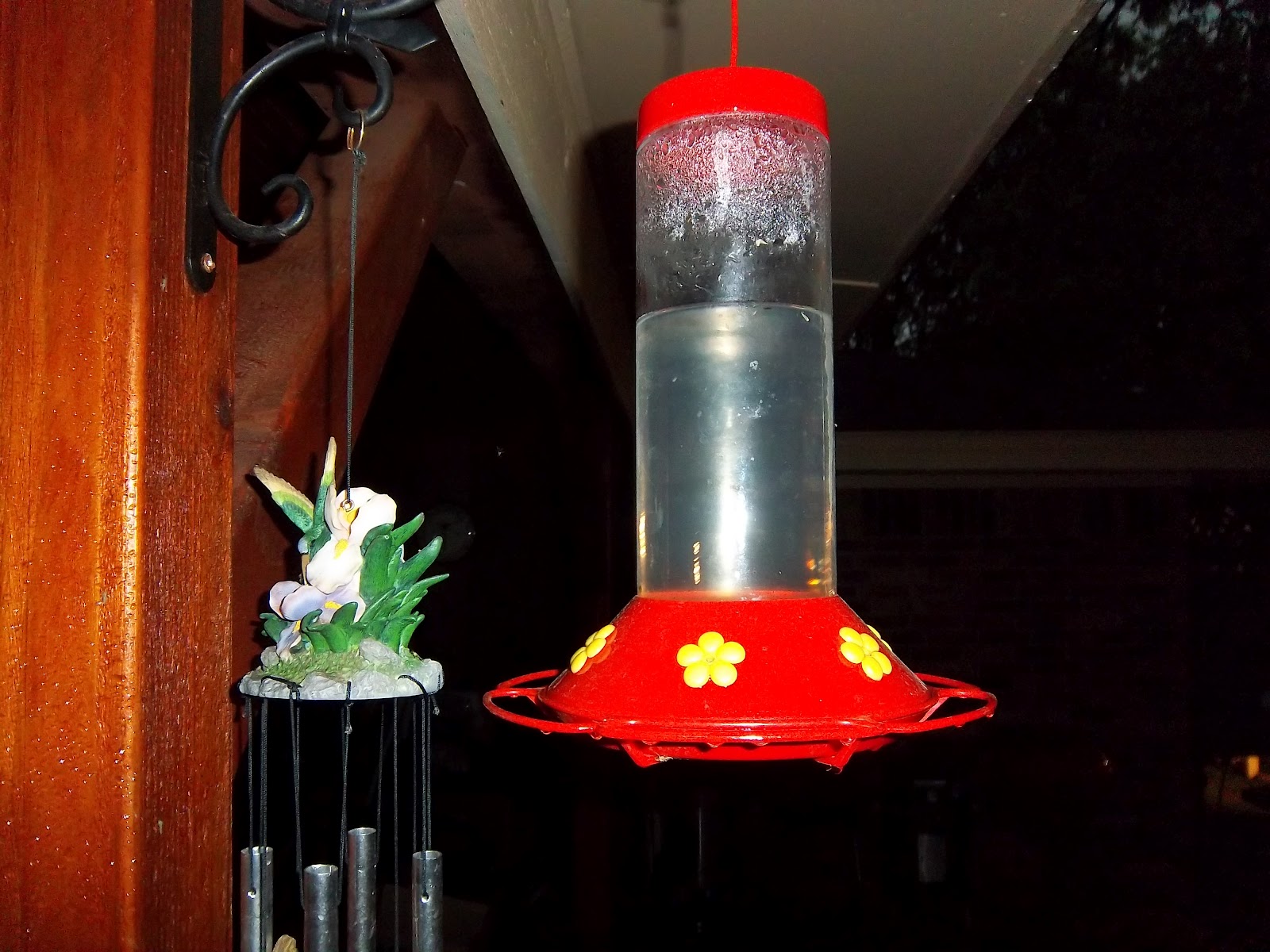
OK, so I haven't seen a hummingbird yet this year, but they're coming. They have been sighted in Texas and are heading back this way. Drought conditions being what they are, some supplemental food is going to be important. I cleaned out my hummingbird feeder and set it out this morning (this picture is from last summer, not this morning.)

There is no need to spend a lot of money on nectar. You have a red feeder, the birds don't need red nectar (you don't see red nectar in your flowers, do you?) Give your wallet/purse a rest and use the following recipe: 4 parts water and 1 part sugar. You can dissolve the sugar in the water without boiling, but most of us do boil the water first--if nothing else as an extra measure to kill any bacteria that might remain in your feeder after cleaning. If you made too much, you can keep the extra in your refrigerator until you need it.

It is important you change your feeder nectar frequently--at least every 3 days. Perhaps more often in the hottest part of the summer. If the nectar looks cloudy, you definitely need to change it.

I encourage you to put out the welcome mat for your hummingbirds as soon as possible. Even if you don't see them visit, it is quite possible they are early in the morning or late in the evening. I hope however, you have the chance to enjoy these amazing little birds.

Good birding!

Thursday, April 5, 2012

Prepping for Hummingbirds


Pre-sunrise shot of hummingbird feeder.
A few folks say they have seen hummingbirds in the area. I haven't yet, but it can't be long.


As I mentioned in the previous post, I have started to change out feeders. I took down most (not all) of my seed feeders and rehung one of my hummingbird feeders. I'll get another up as soon as I see my first hummingbird.

Coral honeysuckle taking off this spring


However, whenever possible, try to supply natural food. I planted a lot of plants since we moved into our new house to encourage the hummingbirds, butterflies and pollinators. We didn't lose any plants (except perhaps the Turk's cap) during the drought. Everything is coming up this spring. My coral honeysuckles were just little twigs when I planted them next to the arbor. My husband figured they might grow to the top about the time we're eligible for Medicare. However, the plants have really taken off this spring.


Salvia is starting to bloom
It's easy and inexpensive to make your own sugar water for your hummingbird feeder, so don't by the syrup in the store. Just boil some water and mix 4 cups of water to 1 part table sugar. Stir until dissolved. Be sure to change often.,  I already had to change the sugar water in my feeder because crud was beginning to grow in it. So keep it clean and you should see some of these beautiful little birds any day!

Good birding!


Friday, March 25, 2011

Time to Get Your Hummingbird Feeders Ready


Tiny patient at Wild Bird Rescue (left)


Hummingbirds are moving back into Texas. The reports on TEXBIRDS have been getting closer by the day. This morning I saw a post of a black-chinned in Weatherford, so they should be arriving here within days. The ruby-throated hummingbirds are usually a couple of weeks behind.

Although plantings of native flowering plants is the best option for attracting these tiny birds, many of us also like to attract them to areas we can watch them with feeders. If that's the case for you, it's time to get your hummingbird feeders ready to go. Make sure they are clean. Plain soap and water works. I used to get really frustrated trying to make sure all the little crevices and tiny holes were clean until I happened upon this little trick--use Efferdent tablets. They are very helpful in cleaning tiny areas. You can also use vinegar and baking soda mix (just like unplugging your drains.)

Don't buy commercial nectar. It is expensive and has red dye. The red in the feeders is enough to attract the birds. They could care less what the nectar looks like--you don't see red nectar in flowers, do you? To make your own nectar much more cheaply, mix 1 c water and 1/4 c granulated sugar. You can stir until the sugar is dissolved--I usually boil the water, stir in the sugar and then let it cool. The sugar dissolves more quickly and thoroughly in hot water. If you make more nectar than your feeder holds, you can put the sugar water in a covered container and store it in the refrigerator for a few days.

You should dump any nectar in your feeder every few days. You will need to do it more often when it is hot than when the temperatures are moderate. Always clean out your feeders if you see any cloudiness.

When you place your feeders, hang them close to cover (trees and shrubs) but not under an overhang. Hummingbirds generally shoot up when startled by predators and prefer to see open sky above the feeders.

So get out your feeders and get ready to enjoy these beautiful and interesting birds.

Good birding!