Showing posts with label migration. Show all posts

Friday, August 14, 2026

Bird Outing at Lake Arrowhead State Park


Ómar Runólfsson,
CC BY 2.0 <https://creativecommons.org/licenses/by/2.0>,
via Wikimedia Commons

The monthly bird outing at Lake Arrowhead SP on August 8 was, as is usual in August, a little slow. The birds don't like the heat any more than we do. We did have a nice breeze off the lake though, which helped a lot.

The best birds of the morning were a handful of black terns, which made the morning worthwhile. Black terns migrate through our area in the Spring and Fall.

I have trouble with tern ID, mostly because most terns look a lot alike and they are generally moving over the lake feeding, instead of sitting quietly to be observed. However, the black tern is easily identifiable, because it is dark gray/black, instead of the white of the other terns.

The birds seen Saturday included great egret, snowy egret, western cattle egret, double-crested cormorant, white pelican, killdeer, black tern, mourning dove, northern cardinal, northern mockingbird, orchard oriole, yellow-billed cuckoo, Bewick's wren, ladder-backed woodpecker, red-bellied woodpecker, great-tailed grackle, and turkey vulture. Not a bad morning for early August.

The bird outings at Lake Arrowhead SP are the second Saturday of each month at 8:00 AM. We meet at the parking lot adjacent to the admin building (near the fishing pier). The park entrance fee is $4 per person, unless you have a TPWD park pass.

Migration should be picking up in September, so come on out on September 12.

Good birding!

Sunday, July 19, 2026

Fall Migration Already?


US Migratory Flyways
USFWS Headquarters, Public domain,
 via Wikimedia Commons

The calendar continues to turn. It seems like Spring migration just ended with the arrival of the Mississippi kites, yellow-billed cuckoos, and common nighthawks, and Fall migration fixing to get under way. 

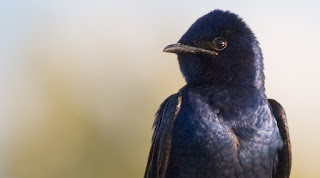
We have a few bird species which will leaving soon. Purple martins start leaving in July. I am looking around for a roost. A roost is a location where a bird species masses over some days before taking off as a group on their migration. For a few years, there was a reliable roost near my house, but that location hasn't been used the last couple of years. No idea why the purple martins decided it was no longer suitable.

We will soon start seeing migratory shorebirds passing through from their breeding season in the Artic, returning to winter in central and south America.

Spring migration is a little more exciting since it occurs over a shorter period of time as birds have a shorter timeframe in which to get to their breeding grounds, mate, and raise their young before the window closes.  Fall migration is spread over a longer period of time. Birds tend to take some time on the way to rest and fill their tank up, waiting for the next favorable front to move through. 

Although the "best" months for fall birding tend to be September/October, it's time to start paying attention. You never know what you might see.


Good birding!

Sunday, July 27, 2025

Purple Martins Heading Out!


Purple Martins are the first bird to migrate back to us in the spring and the first to leave.  They start showing up in February and leave the end of July/early August, although there are records in our area into September.

I haven't yet seen a roost. The purple martins tend to congregate in a large swarms after the young fledge before they leave on their way to Brazil for the winter. There is a tree in a field near me that was a roost site for several years, but it wasn't used last year. There were easily 1000+ birds in this roost. That is not overly large. I am keeping an eye on it though, because it is in a good spot. There are documented instances of roosts in other locations of 100,000 - 200,000 birds.  Birds disperse during the day to hunt insects and congregate back to the roost at sunset.

If you see a roost site, please let me know. txbirds@gmail.com.

Good birding!

Thursday, January 30, 2025

Purple Martins on the Way!

Purple Martin house at Wild Bird Rescue

Spring is just around the corner, so it's time to get outside. Spring migration is just getting started, and right now at least, the weather is moderating, so it is a good time to check out the birds.

A lot of bird activities are scheduled over the next few weeks, and some other bird-related activities are going on, and I will post about those, but let's start with the arrival of purple martins.

Purple Martins will be coming into town soon. We usually have scouts arriving in early February. The Purple Martin Conservation Association keeps a record of scout reports each year, and a number of reports have already been made. In fact, there is a report already posted on January 16 in North Richland Hills. What does that mean for you? If you have purple martin houses, get them cleaned out and ready. The hard part is keeping out house sparrows and starlings until the purple martins start moving in. You might plug the entrances until you see a scout and then unblock the opening.

I love the robotic sounds of these birds in the summer. Enjoy!

Good birding!

Monday, September 2, 2024

Three Mornings in Lake Wichita Park


White-faced ibis at Lake Wichita Park
Fall migration is definitely underway. It started several weeks ago with the departure of purple martins, but many birds are moving, or preparing to, now.

I spent a coupe of hours in Lake Wichita Park three mornings this week. I tend to go to Lake Wichita Park more often than other locations because it is close to my house.

The barrow pit is now a mudflat, which does attract shore birds, like the white-faced ibis in the picture to the left. Right now, this nearly dry pond is hosting several species of herons/egrets, as they prepare to move south or pass through on their way. There are several individuals of various species there, forming the groups that will one day, leave together. (Great egrets, snowy egrets, little blue herons, yellow-crowned night herons, black-necked stilts, killdeer). 

I also saw several warblers passing through. I am not the greatest at warbler identification. The birds are tiny and they are usually moving constantly. But I am confident of a yellow warbler and a mourning warbler, but I saw one or two others that I couldn't be sure of in the extremely short time I was able to see them.

I saw some individual Mississippi kites earlier this week, but not this morning. One of my friends said she saw a group of about 15 circling over her house, so they should be gone soon. Usually, these birds head out the end of August/early September.

Between Thursday and today, I saw the following birds: mallard duck, great egret, snowy egret, yellow-crowned night heron, little blue heron, great blue heron. white-faced ibis, black-necked stilt, killdeer, Mississippi kite, turkey vulture, Eurasian collared dove, white-winged dove, mourning doves, downy woodpecker, barn swallow, Northern cardinal, blue jay, Carolina chickadee, northern mockingbird, Carolina wren, yellow warbler, mourning warbler, Baltimore oriole, American pipit, American robin, red-winged blackbird, great-tailed grackle, European starling, house sparrow. In addition, I did see some small peeps fly over that I couldn't identify and a couple of other warblers that stumped me.

A runner went by me today and asked what my best bird seen was this morning. For me, it was the little blue heron, although it is tough to beat the black-necked stilt, but I had to make a quick decision, since he was running off.

Many of our summer birds are gone (or I just haven't seen them in the last week or so). I haven't yet seen any of the birds that come in here to stay for the winter, but I am sure they are coming. It does seem like there are more robins than are here in the summer, but it could just be they are starting to form up their winter flocks (more on that behavior in another post soon).

Fall migration is more drawn out than the spring migration, when the birds are rushing to get to their breeding grounds and get the best spots. We should have a few more weeks of prime birding coming up, so get outside.

Good birding!

Tuesday, July 16, 2024

I Am Over Summer

Dominic SheronyCC BY-SA 2.0, via Wikimedia Commons


 I am not a Summer fan. The prediction for today is 106 degrees. Ugh! Come on, Fall!

However, I did get out this morning early and did a short bird walk in Lake Wichita Park. I spent almost an hour, going down the chat trail, around the barrow pit, and most of the way around to Murphy's Mound. It was 80 degrees with a light breeze at 7AM when I started out and too darned hot by the time I got back to my car.

July is not the best time for birdwatching in Wichita Falls. The birds are finishing up raising their broods and most have ceased their territorial singing, making them harder to find in the foliage. Since we had more rain than usual so far this summer (yeah!), the foliage is fairly full. The birds are also too darned hot and not expending more energy than necessary and hiding out in the shade. Fall migration has now started. Our first spring migrant, the purple martin, has departed the area within the last week.

Having explained all the reasons birding sucks in late summer, I had a good morning. My favorite bird was the yellow-billed cuckoo (shown above). These birds are considered a threatened species and are secretive. I didn't see it this morning, but I heard its distinctive call. My birds this morning: double-crested cormorant, cattle egret, great egret, yellow-crowned night heron, green heron, mallard duck, Mississippi kite, Eurasian collared dove, mourning dove, yellow-billed cuckoo, northern cardinal, Carolina wren, blue jay, western kingbird, robin, scissor-tailed flycatcher, barn swallow, chimney swift, red-winged blackbird, common grackle, and great-tailed grackle.

Good birding!

Monday, March 11, 2024

March Birding at Lake Arrowhead State Park

Snow geese
Photo by Raymond Eichelberger on Unsplash

Saturday was the monthly bird outing at Lake Arrowhead State Park. The morning was beautiful. However, a
brisk wind, combined with 40 - 45 degree weather meant it was a little nippy to start. We had a new birder with 
us this month. She said birding was on her retirement bucket list. I can't imagine anything better.

This time of year is the beginning of the spring migration (although April should be even better). Purple Martins
are back, and our winter birds are still here. There have been reports of some summer birds showing up very early
(a summer tanager, for example). The highlight of my morning was a small flock of snow geese that flew over
our heads. A neotropic cormorant was also a good sighting. We also saw a beaver, and I saw some white-tailed deer.

I got to the park a little early and also birded West Arrowhead Rd that runs just outside the park boundary for a 
short time after we broke up, so my list includes those birds.

The birds I saw/heard included:

Canada goose
Snow goose
White pelican
Double-crested cormorant
Neotropic cormorant
Great blue heron
Ring-billed gull
Killdeer
Least sandpiper
Gadwall
Mallard
American Coot
Black vulture
Turkey vulture
Eastern phoebe
Ruby-crowned kinglet
Northern cardinal
Northern mockingbird
Carolina Chickadee
Eastern bluebird
Dark-eyed junco
Harris's sparrow
White-crowned sparrow
Field sparrow
Brown-headed cowbird
Great-tailed grackle
Red-winged blackbird
European starling

Overall, a very good morning. You're invited to come bird with us on the second Saturday of each
month. We start at 8:00 AM in the parking lot near the fishing pier. Beginners and kids welcome. We look
at more than just birds--plants, bugs, etc. This is a leisurely stroll of about 1 to 1.5 miles.

Good birding!

Monday, August 7, 2017

Purple Martin Roosts

Purple Martins. Photo from Wikimedia Commons
I haven't been here in a while--it's been one thing after another, so I have barely watched birds since my last post. The most recent sideliner has been a back injury--down for 3 weeks. I am finally near caught up at work, so I am planning a birding day for my birthday next Saturday.

In the meantime, I saw a Facebook post by a friend indicating the purple martins were beginning to form one of their large pre-migration roosts over in Lakeside City, so my husband was nice enough to swing by the location of our annual roost off location off Fairway Blvd to check the status there on our way home last night. Sure enough, the lines were covered with purple martins. Usually, these are very noisy birds, but it seems when they start preparing to migrate, they get much quieter. I was watching a couple of thousand birds, but didn't hear any of them calling while they were catching bugs just before sunset.

Purple martins are one of the first of our summer birds to arrive in our area and one of the first to head south. They winter in South America, primarily in Bolivia, but also in parts of Brazil and Argentina. Although popular folklore has them as the scourge of the mosquito population, they eat few, if any, mosquitoes. If you want to control those insects, think bats. Purple martins are active high in the air during the day; mosquitoes stay low to the ground, primarily at  night. However, martins eat large numbers of insects and bugs: beetles, flies, dragonflies, spiders, grasshoppers and crickets, among others. Think about this before spraying your yard with a lot of poisons to control the insects in your yard. In Texas they have even been seen with cicadas, although they are tough to swallow.

Many people in our area put up martin houses in hopes of attracting martins to their yards. I was reading an interesting section of the Birds of North America online species account on martins about the relative merits of various houses. Martins favor wooden boxes over aluminum (probably because of the tendency of the aluminum houses to get much hotter.) However, both seem to be equally good in terms of nesting success. They also prefer houses that are larger and deeper (distance from opening to floor of the nesting area) than most commercially available houses--the deeper houses also seem to provide for better nesting success. Gourd houses provide a deeper nesting site and are well-liked by the birds. They seem to prefer nest sites 3 - 5 m from the ground (approximately 10 - 16 ft.) We think of purple martins as being dependent upon the houses we put up, but they use natural cavities and single unit bird boxes as well as the "apartment complexes" we put up.

If you decide to put up a martin house, be sure to have it up by February and keep evicting the house sparrows and starlings that will attempt to move in before the martins arrive. Then enjoy their antics over the summer.

Good birding!

Saturday, August 25, 2012

Hummingbirds Coming Through

Hummingbird feeder on my deck
I've seen hardly any hummingbirds this summer, until the last couple of weeks. Since then I've had regular visits by ruby-throated hummingbirds and black-chinned hummingbirds multiple times each day. Hummingbird migration is underway. If you got discouraged over the summer with the  lack of birds at your feeder, clean them up and try again. You'll probably get a hit. Although natural plantings are better, the lack of rain means that some of the best flowering plants for hummingbirds may not have a lot of blooms on them, so the extra nectar will be welcome.

See the feeder in the photo above? The wind chime behind it has little hummingbirds on it. They are about the same size as the hummingbirds that have been visiting the feeder.

How long should you leave your hummingbird feeders up? Although most of the birds will be gone by the end of September, I always leave my hummingbird feeder up until the end of October. There have been (rare) sightings of hummingbirds as late as December--but they are truly very isolated incidents.

Be sure to clean out your feeders and replace the nectar every couple of days. A little bit of water and sugar is not a lot of money and the health of your hummingbird visitors depends upon you.

Good birding!

Sunday, August 21, 2011

Sandpiper Migration Underway


Although we are still in the height of summer in terms of heat, fall migration has started and sandpipers are passing through on their way south. I decided to try to beat the heat yesterday morning and got out at 7:00 AM--84 degrees--to the chat trail in Lake Wichita Park. I walked to the barrow pit in hopes there would still be some water, and consequently some birds.

I make no bones about the fact that I find shorebird identification difficult. I have to have a good view for a long time to be sure of any but the most distinctive shorebirds, especially the peeps (the smallest of the sandpipers.) Fortunately, I got both.

The first was a spotted sandpiper, easily told by the distintive bobbing motion it makes as it walks along the shore line. The photo below (courtesy of Mike Baird, Wikimedia Commons) doesn't show the spots on the underside. I has a lot more difficulty with the two small peeps. I easily spent 20 minutes watching them and working with my field guide to identify the Baird's sandpiper. (Photo below courtesy of the US Fish and Wildlife Service.)


The black-necked stilts are still present in decent numbers and easy to identify. There were also some blue-winged teal on the barrow pit.


Warblers are also beginning to come through on migration. I saw several yellow warblers along the trail and around the barrow pit (photo below from Wikimedia Commons.)

I was sitting on one of the benches along the trail looking over the barrow pit. The stilts were unusually quiet. Then all of a sudden all of the birds starting making noise. When I looked up, there was a Cooper's Hawk flying over the water, probably looking for breakfast. A couple of killdeer flew up and mobbed him into the trees. I don't recall seeing shorebirds mob predators before, but obviously they do.

A little later, I was trying to identify a little Empid (no luck there) when I had the chance to watch two black-chinned hummingbirds chasing each other all over the area.

On the way back to my truck, I watched a pair of orchard orioles searching through the willows for bugs. All in all, a good morning.

Good birding!


Monday, March 7, 2011

Winged Migration Program Tonight

"Winged Migration: Mysteries of Bird Migration" is tonight at River Bend Nature Center, 7 - 9 PM. For Rolling Plains Texas Master Naturalists, this program counts for advanced training credit.

Admission is free for RBNC members; $3 for non-members.

Good birding!

Tuesday, February 22, 2011

Save the Date! River Bend Lecture Series

On March 7, I will be presenting "Winged Journey: Mysteries of Bird Migration" at River Bend Nature Center. The program is scheduled for 7 - 9 PM. Admission is free for members; $3 for all others.

For my Texas Master Naturalist friends, this program will meet the requirements for advanced training.

Good birding!

Tuesday, January 25, 2011

Bird Migration Program

River Bend Nature Center is starting the next round of Adult Education programs. I was asked to do a bird-related topic so posted a query on Facebook for possible topics. The big winner was migration. Therefore, on Monday, March 7, 7:00 PM - 9:00 PM, I will be presenting "Winged Journeys: Mysteries of Bird Migration."

If you're interested in this topic, please plan to attend. Historically, River Bend has had a small admission fee for non-members and members could attend at no charge. When I see the promotion for the event, I will post those additional particulars. For Texas Master Naturalists, the intent is the program will meet requirements for advanced training credit.

Good birding!

Friday, October 15, 2010

Science Saturday on Migration

Tomorrow's Science Saturday at River Bend Nature Center is on migration. Birds aren't the only animals that migrate, but they are among the most spectacular. A good time for the kids. Check out the blog roll for River Bend's blog--further details are there.

Good birding!

Sunday, August 1, 2010

The Earth's Cycle

Gardeners are highly attuned to the cycle of the seasons. So are birders.

I woke up earlier this week and thought, "It seems dark for this time of the morning." I had to check my clock to be sure it was my usual wake up time. It was; it's just the days are once again getting shorter. And fall migration season has started.

It seems we just finished talking about spring migration and now we're into fall. And that is true. Spring migration continues into May/June and Fall migration begins in July. The birds are constantly on the move.

The purple martins at Wild Bird Rescue fledged last week; I didn't see any purple martins yesterday while I was working there. I saw postings on OKBIRDS and TEXBIRDS about large martin roosts, which generally precede the birds' departure.

The fall migration is usually more drawn out, so we will have a chance to see birds for several months.

Good birding!

Saturday, August 29, 2009

Fronts and Migration

Migration takes a lot of energy, so when possible, birds use weather fronts to give them a tail wind and help them along the way. Earlier this week we had a small front come through bringing a little rain (1/4 inch) and a cool front (100's before, low 90's after). When I drove into Midwestern State University, I saw a kettle of turkey vultures (TV) forming overhead, probably 25 or so when I first saw it, gathering more as it moved away. Turkey vultures are usually here in large numbers until late September--this could have been the first of our locals heading out or a group from further north passing through. I was reading up on Birds of North America Online and noted that TV migration is not well studied. It always amazes me what we don't know about fairly common birds.

Later that afternoon, I saw a group of about 30 common nighthawks forming up. This is about the time the vast majority leave the area--they are mostly gone by mid-September, although a few linger to the beginning of October. We received a newly hatched common nighthawk this week at Wild Bird Rescue, so I hope at least some adults linger longer--adults have to feed on the wing and handfeeding a bird for months over the winter is not a pleasant prospect.

Good birding!

Monday, September 15, 2008

Hummingbirds on the Move!

Beverly McClure posted a comment to the last blog about the wrens, commenting on the increased numbers of hummingbirds in her yard over the past several days. I also received an email from a fellow volunteer at Wild Bird Rescue that she had 10 - 12 hummingbirds at her feeders this past week. It's that time; the hummers are on the move to their winter homes.

Here in Wichita Falls, we normally have 2 species of hummingbirds in the summer--the ruby-throated and the black-chinned. However, during fall migration other species may show up. So keep your cameras handy.

It is important to leave up your feeders during this time and leave your flowering plants (don't cut them down) so these little guys can tank up. Many of them fly over the Gulf of Mexico for several hundred miles without a stop and need the extra calories.

Please post if you have any interesting sitings.

Monday, August 25, 2008

A Musseling We Will Go

Sunday was hot. It is of course, summer in Texas, so that should come as no surprise. Other than being at home, soaking up the air conditioning, there is no better place to be than in the water. Even when that water registers 90 degrees on the thermometer.

I had planned a Nature Trackers Mussel Watch for Sunday at Lake Arrowhead State Park. I usually like to get up early to go, but had set a later time of 10 AM since my husband doesn't like to get up so early (not that he was planning to go--he just babysits the critters while I am gone). The Rolling Plains Texas Master Naturalists conduct a number of Nature Tracker programs (www.tpwd.state.tx.us/learning/texas_nature_trackers) during the year. The primary one I am involved with is counting mussels in various waterways in our area. Sundays are not a good time to schedule these events as most of our members are dedicated church goers. However, between my schedule and the other chapter projects planned during the summer, there were few options left. And as it happened, I was the only one able to make it. But that was fine--it is easier to combine a mussel count with birdwatching by myself.

As it happened, it was a great day for mussels. There is one area at Lake Arrowhead that predictably had a high count and that is where I headed. Pink papershells, fragile papershells, giant floaters and Texas Lilliputs were in good number. Later, sorting shells on the tailgate of my pickup, where my thermometer was recording 120 degrees (who decided to make bed liners black, anyway?), I was less enthusiastic about the numbers to sort out.

I keep meaning to learn more of the freshwater invertebrates. There were a lot of them to see. But I had neglected to bring my freshwater invertebrate field guide (yes, they make them; yes, I am a geek for having one) and hand lens, so stuck to mussels and birds.

Birds were also good. The herons and egrets haven't yet headed south, so there were numbers of great egrets and snowy egrets. I also saw a green heron. But it is also obvious migration is underway. A few cormorant were sunning of the pier (soon there will be thousands). A few white-faced ibis and a reddish egret were wading near the shore, and a small flock of terns were fussing. Terns are difficult for me. I have the identification narrowed to two possibilities and need to get out my CD of bird calls to resolve the matter. A couple of peeps flew past, too fast for me to make a call on the little guys.

Overall, a great morning. My husband could tell I had a good time when I came home wet, covered with mud and with a red nose from the sun. Life just doesn't get any better.

Good birding!