Showing posts with label birdwatching. Show all posts

Thursday, February 12, 2026

Time for the Great Backyard Bird Count (GBBC)!


One of my favorite birding activities is the Great Backyard Bird Count every February. Birders have several bird count activities, all of which provide data used to monitor population trends.

Basically, participants count birds in any location they wish (yard, local park, etc.) for a minimum of 15 minutes during a 4-day period. This year that is Friday, Feb 13 - Monday, Feb 16. Then you provide the information via Merlin or eBird.  Merlin is probably the app of choice for a new birder; eBird has more functions, but a little more complicated to learn for a newbie. You count every bird you see and you can count as long as you want, just at least 15 minutes.

Our monthly bird outing at Lake Arrowhead State Park on Saturday, Feb 14 will be part of the GBBC. If the weather forecast is accurate, we might get a little wet. We meet in the parking lot near the fishing pier at 8:00 AM. You might arrive a little early in order to stop at the self-pay station, since the office doesn't open until 8:00. We saunter for about 1 - 1.5 hours (depending on the weather and the birds) and cover around a mile. We don't move very fast. We're there to watch birds, not set speed records. The route is paved and level. We do have people come with limited mobility, so don't let physical restrictions put you off.

I will also be birdwatching on the other days as well. Friday at Lucy Park, Sunday at Wichita Bluff, and Monday at Lake Wichita Park.  I may try to slip in a couple of other short observation periods at a few other locations, time permitting. It's a busy weekend already, so it will be a spur of the moment thing.

This is a fun activity to get kids involved. Since you only have to take part for 15 minutes, it isn't a challenge to keep them involved. If you have a budding birder, then you can stretch the activity as long as you want. Instructions for participating are available on the GBBC website.

If you have any questions or would like to participate in one or more of the counts, contact me at txbirds@gmail.com.

Good birding!

Friday, July 25, 2025

Summer Bird Feeding


Male house sparrow at
sunflower feeder
Do you feed birds in the summer? Should you? Most people remove all of their feeders in the summer, except their hummingbird feeders. 

The reasons? Feeding the birds is expensive, and there is more available food from natural sources in the summer.

However, I do feed the birds in the summer, although I do feed a lot less. Why do I choose to feed in the summer? 

I still like to see the birds and the feeders do bring them where I can see them. Although I get mostly unexciting birds like the house sparrow pictured, I do get some of the birds I prefer.

Another reason to feed in the summer is to help out the parent birds. Although birds primarily focus on insects in the summer to feed their young, parents are run ragged trying to keep baby mouths full, so easy access to some seed helps the parents stay healthy.

I hang four feeders in the summer: a hummingbird nectar feeder, a sunflower (or mixed food) feeder, a shelled peanut feeder, and a safflower feeder. In the winter I usually have at least four more feeders going. Sometimes more. 

Why these four feeders? I think the hummingbird feeder is self-explanatory. I feed black oil sunflower because it appeals to more types of birds than other foods, and it tends to be less expensive than a seed mix. When I feed a mix, I choose one that is predominantly black oil sunflower. This is also the feeder that the squirrels like, and I do love to watch the squirrels. The safflower is for the cardinals, although house finches also seem to like it. Unfortunately, the white-winged doves also like safflower, and yes, the buggers can hang on to a tube feeder. The peanut feeder is for my woodpeckers. However, since the starlings have discovered the peanuts, they prefer that one. Fortunately, I don't have many starlings. And I love my woodpeckers. They will eat the sunflower seed, but in the summer, peanuts are their preference.

In the summer, I only add food once a day. When it's gone, it's gone. Sometimes, I may skip a day.

Don't forget water. If you don't want to feed, at least provide water. You may have to fill your bird bath multiple times a day when it is hot. If your bird bath is deep, then add some rocks to create some shallower pools for the smaller birds. The birds also appreciate a mister if you have one.

Keep your feeders clean. A good scrub once a week is good. As always, watch for any birds that appear to be ill. If you see sick birds, take your feeders down immediately and clean them thoroughly. Wait 10 days before putting them back up. 

Good birding!


Saturday, August 10, 2024

Doing the Spider Dance

When you've got your eye on a bird and trying to identify it, you can get so focused, you're not paying attention to much of anything else--not a good thing. 

I took a bit of time on Thursday morning to take a walk in Lake Wichita Park and twice walked into a spider's web. In my rational mind, I know there is no harmful spider in our area that builds a web that I am going to walk into, but as soon as I feel that spider silk on my skin, the reptilian brain takes over and I'm doing the spider dance trying to get it off me and to reassure myself the web resident is NOT crawling on me.

Safety should be a big concern for every birder, especially those, like me, who most often are out by themselves. Spiders are not a huge safety concern, but in years past I have had other near misses. A few years ago I was peering intently through my binoculars and moving forward, nearly stepping on a rattlesnake. He was nice enough to rattle to let me know I was getting too close, and allowed me to back away. However, most commonly, I stop to watch bird and don't notice I am standing in or close to a fire ant bed. They are not nice enough to give a warning before biting.

Although other critters are a hazard, it is more likely for me to twist an ankle or fall because I stepped into a hole I didn't see or off the edge of the trail with a bigger level change that I expected. Fortunately, other than some bumps and bruises (mostly to my pride), I haven't had any serious injuries. But I carry a cell phone and a duress alarm, just in case.

My Mom used to say, "I shoulda named you Grace." Sarcasm was her strong suit.

Get out and enjoy your birding, and be safe.

Good birding!


Tuesday, July 16, 2024

I Am Over Summer

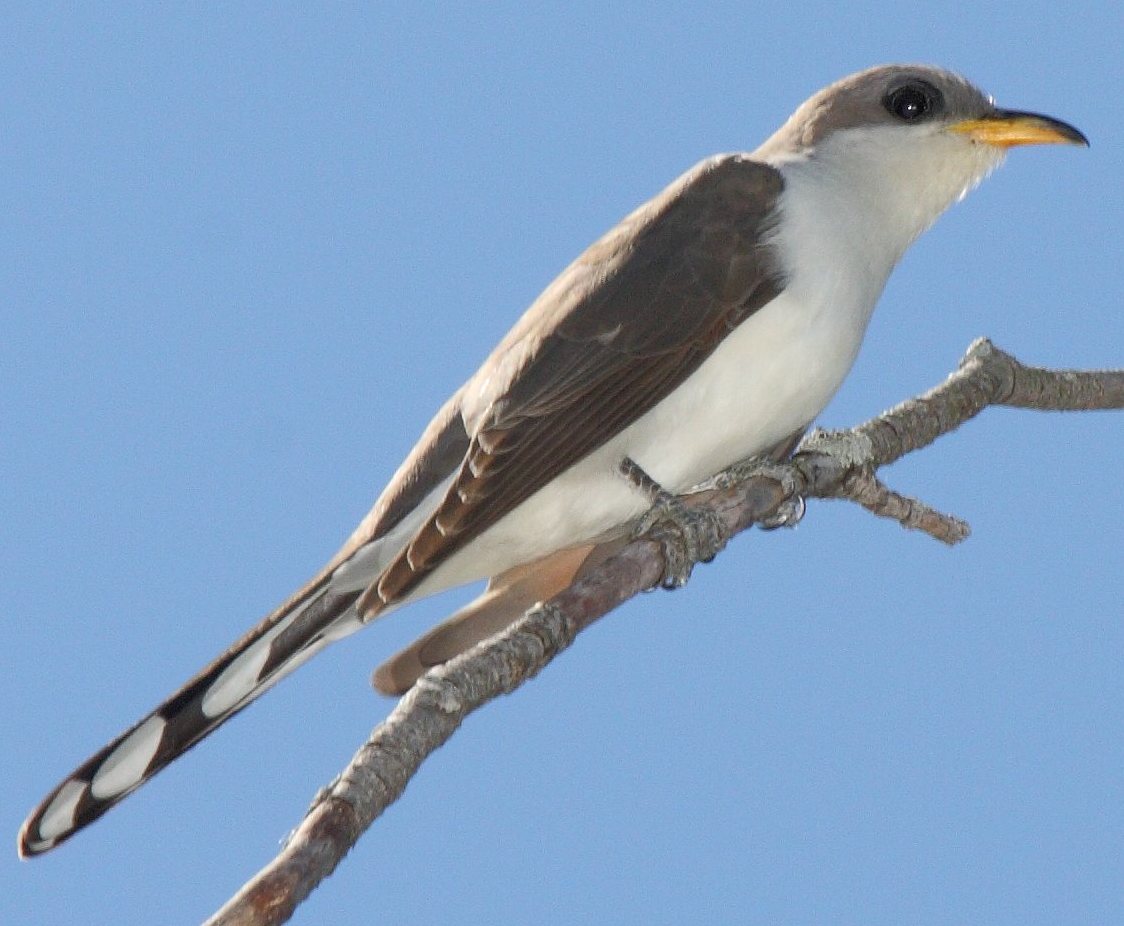
Dominic Sherony, CC BY-SA 2.0, via Wikimedia Commons


 I am not a Summer fan. The prediction for today is 106 degrees. Ugh! Come on, Fall!

However, I did get out this morning early and did a short bird walk in Lake Wichita Park. I spent almost an hour, going down the chat trail, around the barrow pit, and most of the way around to Murphy's Mound. It was 80 degrees with a light breeze at 7AM when I started out and too darned hot by the time I got back to my car.

July is not the best time for birdwatching in Wichita Falls. The birds are finishing up raising their broods and most have ceased their territorial singing, making them harder to find in the foliage. Since we had more rain than usual so far this summer (yeah!), the foliage is fairly full. The birds are also too darned hot and not expending more energy than necessary and hiding out in the shade. Fall migration has now started. Our first spring migrant, the purple martin, has departed the area within the last week.

Having explained all the reasons birding sucks in late summer, I had a good morning. My favorite bird was the yellow-billed cuckoo (shown above). These birds are considered a threatened species and are secretive. I didn't see it this morning, but I heard its distinctive call. My birds this morning: double-crested cormorant, cattle egret, great egret, yellow-crowned night heron, green heron, mallard duck, Mississippi kite, Eurasian collared dove, mourning dove, yellow-billed cuckoo, northern cardinal, Carolina wren, blue jay, western kingbird, robin, scissor-tailed flycatcher, barn swallow, chimney swift, red-winged blackbird, common grackle, and great-tailed grackle.

Good birding!

Monday, March 11, 2024

March Birding at Lake Arrowhead State Park

Snow geese
Photo by Raymond Eichelberger on Unsplash

Saturday was the monthly bird outing at Lake Arrowhead State Park. The morning was beautiful. However, a
brisk wind, combined with 40 - 45 degree weather meant it was a little nippy to start. We had a new birder with 
us this month. She said birding was on her retirement bucket list. I can't imagine anything better.

This time of year is the beginning of the spring migration (although April should be even better). Purple Martins
are back, and our winter birds are still here. There have been reports of some summer birds showing up very early
(a summer tanager, for example). The highlight of my morning was a small flock of snow geese that flew over
our heads. A neotropic cormorant was also a good sighting. We also saw a beaver, and I saw some white-tailed deer.

I got to the park a little early and also birded West Arrowhead Rd that runs just outside the park boundary for a 
short time after we broke up, so my list includes those birds.

The birds I saw/heard included:

Canada goose
Snow goose
White pelican
Double-crested cormorant
Neotropic cormorant
Great blue heron
Ring-billed gull
Killdeer
Least sandpiper
Gadwall
Mallard
American Coot
Black vulture
Turkey vulture
Eastern phoebe
Ruby-crowned kinglet
Northern cardinal
Northern mockingbird
Carolina Chickadee
Eastern bluebird
Dark-eyed junco
Harris's sparrow
White-crowned sparrow
Field sparrow
Brown-headed cowbird
Great-tailed grackle
Red-winged blackbird
European starling

Overall, a very good morning. You're invited to come bird with us on the second Saturday of each
month. We start at 8:00 AM in the parking lot near the fishing pier. Beginners and kids welcome. We look
at more than just birds--plants, bugs, etc. This is a leisurely stroll of about 1 to 1.5 miles.

Good birding!

Birding is Good for You!


Me birding at Lake Arrowhead 
State Park (several years ago)

I was reading an article in the March 2024 American Birding Association magazine, Birding, titled, "The Birding Prescription." Although the ABA posts its magazines online, the March issue isn't posted yet, and it will be in a members only area of the website. I am fairly certain this isn't a magazine carried by the Wichita Falls Public Library, although I haven't looked at their magazine selection for some time.

I know I always feel better after being outside birdwatching (or watching birds through the window on days I can't/don't want to go anywhere). However, this article outlines the author's anecdotal experience with birding (or ornitherapy, as she calls it) when she was fighting breast cancer. After this, she summarizes results from multiple studies which indicate birdwatching has many positive affects on people. Here is a summary of the main points:

  • Listening to bird song for 6 minutes can reduce anxiety and irrational thinking for up to 8 hours
  • Although not necessarily birdwatching, 20 minutes of exposure to green spaces lowers cortisol (stress hormone)
  • Participation in citizen science activities improves well-being (that's part of the reason members of our local Texas Master Naturalist chapter are such a positive group!)
  • People who live in areas with higher bird diversity experience fewer hospital admissions for mood and anxiety disorders
  • Birding can help restore attentiveness, reversing attention drain (attention restoration therapy)
  • Offer social connections. Feelings of isolation and loneliness and lack of connections may increase the risk of premature death.
The author provides a list of references to the various studies she cites, so if you want to do more study on your own, you can do so.

Whether you agree with all of the assertions in her article or not, it doesn't cost anything to watch the birds. Try it our for yourself. I know some time birdwatching is always a pick me up for me.

Good birding!

Wednesday, January 10, 2024

Feast or Famine

Chat Trail
The objective of birding is to see birds, but some days you have better luck than others. You can bird an area one day and see birds everywhere and the next, you get skunked. On Saturday, the 6th, I went out to the chat trail in Lake Wichita Park. As a rule, the chat trail is one of the best locations to see a variety of birds in Wichita Falls.  Not on Saturday. Winter is close and as you can see, there are few leaves on the trees. However, I didn't see much when I was there, partly because I went later than usual (11 AM - Noon). In the hour I was walking the trail, I saw: mallard ducks, Canada geese, rock pigeons, a red-tailed hawk, a northern flicker, northern cardinals, a blue jay, a house finch, a Lincoln's sparrow, white-crowned sparrows, and Harris's sparrows. Not the longest list, but I was happy with the exceptionally good look at the Lincoln's sparrow.

Circle Trail in Lucy Park
The next day, I decided to try Lucy Park. This used to be my favorite place to bird before the city tried to control flooding by denuding the park several years ago. I won't say I don't see some good birds on occasion, but it is no comparison to what it used to be. The loss of almost all of the understory and many of the older trees greatly impacted the bird habitat. But it is worth a walk now and again. The best areas now are the 3rd Street entrance to the falls and the fence line between the park and River Bend Nature Center. I turned in the other direction, toward the log cabin. Again, I was there later than my usual time (10:40 - 11:40) and saw just a few birds: a northern cardinal, a couple of blue jays, some Carolina chickadees, robins, dark-eyed juncos, a great-tailed grackle (yes, just one) and a solitary cedar waxwing. Initially, when I saw the waxwing in the cedar tree, I thought it was a titmouse, but once I got my binoculars on it, it was definitely a waxwing. I listened and looked around for more, but didn't see or hear any.

Standing water in the barrow pit
I skipped Monday, as it was raining (hurray!), but walked the chat trail again Tuesday. Work sucked up my morning, so since I didn't get to the park until around 3 PM, I decided just to walk and if I saw any birds, great. Since I decided to try the Conqueror Challenge for 2024 (365 miles), I focused on walking, but did see some incidental birds. And with the decent rain on Monday, there was a pool of water in the barrow pit--I haven't seen any standing water in there for months. Proof is in the picture to the left. A northern harrier was hawking around the pit, looking for a snack. There was a group of northern flickers hanging around also--both yellow-shafted and red-shafted. Besides those birds, there were several Eurasian collared doves, some white-winged doves, some robins and a cardinal. 

All-in-all, this week has been a bird famine, but it's still better than working.

Good birding!
 

Saturday, January 6, 2024

ABA's Bird of the Year

By Andy Reago & Chrissy McClarren - Golden-winged Warbler, CC BY 2.0, https://commons.wikimedia.org/w/index.php?curid=63976506


The American Birding Association (ABA) names a Bird of the Year every January. This year's bird is the Golden-winged Warbler. A pretty bird, although not one that hangs out in our area. But that's ok. The bird does range through much of the eastern part of the country, to include Sabine Woods, a Texas Ornithological Society sanctuary in east Texas. 

I bring this up to highlight the ABA. I am a member because they do a lot of bird conservation. The magazine is beautiful and interesting, although it tends to be more technical than many other birding magazines. ABA also has an interesting bird podcast. I try not to read the book reviews--I would have to get another job to support my bird book habit. And more shelf space.

Warblers are challenging birds to identify, mostly because they are constantly on the move. I have a hard enough time catching a glimpse of them, let alone identify or take a picture of one. I used to go birding with a lady named Dorothy when I lived in Virginia. She could see a warbler for a second and tell  you what it was, but she had spent decades banding birds and had written a book about warblers, so there was a good reason for that. We were out one day and I asked her the identity of a duck out on the lake. She said, "It's a duck." She said she hadn't spent much time working on her identification skills with ducks, so she had a difficult time identifying them. I can honestly say, I do reasonably well with ducks, but other than a few very distinctive species, warblers stump me much of the time. But I enjoy watching them anyway.

Good birding!

Thursday, March 24, 2016

Help Out New Birdwatchers

The Rolling Plains Chapter Texas Master Naturalist is holding its spring training for new wannabe Master Naturalists or for those who just want to learn more about nature and the environment in our area. I have the opportunity to teach the class on birds and we also have a field trip to teach the fundamentals of bird identification and get to know some of the common birds in our area. This year, the field trip was held at Lake Arrowhead State Park. Terry McKee and Debra Halter also helped the class members identify birds. It's always good to have more eyes and more knowledge when trying to explain, "Why did you say that bird is a .....?"

We didn't have any exciting birds, but we had several of the common ones for our new birdwatchers to cut their teeth. Birds found Saturday morning included: American coot, pied-billed grebe, gadwall, green-winged teal, blue-winged teal, Canada goose, killdeer, least sandpiper, ring-billed gull, ladder-backed woodpecker, barn swallow, Bewick's wren, northern mockingbird, northern cardinal. eastern phoebe, Carolina chickadee, savannah sparrow, song sparrow, white-crowned sparrow, dark-eyed junco, brown-headed cowbird, red-winged blackbird, common grackle, great-tailed grackle, European starling, and house sparrow.

I enjoy working with new birdwatchers. It helps keep the fun in finding a common bird, but seeing it through the eyes of someone who never recognized the birds before.

Good birding!

Friday, February 5, 2016

Great Backyard Bird Count

One of my favorite events of each winter is the Great Backyard Bird Count (GBBC), held mid February of each year. The GBBC is a joint effort of the Cornell Lab of Ornithology and the Audubon Society. It is a global event, with people in many countries sending information on the birds they see during their backyard count. Last year participants submitted over 147,000 checklists, counting over 5,000 species of birds.

I have blocked out the mornings of the next 4-day count, February 12 - 15, in order to participate.

You do not have to be a great birder to take part. In fact this is an excellent way to introduce new people to birdwatching, so it is perfectly fine if you are new to the hobby. Nor do you have to spend a lot of time (unless you want to.) How do you take part?

  • Choose a nearby location (your backyard is fine.)
  • Find at least 15 minutes to watch birds
  • Count every individual bird you can identify
  • Submit your counts (you may have to set up an account if you are not already registered with eBird or one of the Cornell Lab citizen science projects.)
This is a great project to do with your children or grandchildren, since it doesn't require a long attention span. It could also be a great introduction to birds for home schoolers, classrooms and scout troops.

One of the GBBC counts will be the monthly bird walk at Lake Arrowhead State Park on Saturday, February 13. It will start at the firewood shed (1st camping area to your left after you enter the park) at 8:00 AM. The entry fee to the park does apply.

Usually there is a group Rolling Plains Texas Master Naturalist count on Sunday. I haven't heard if that is happening and it isn't on the chapter calendar. I am keeping that date open, just in case.

I will be doing a count at Lucy Park on Friday, beginning at 8:00 AM. If anyone is interested in taking part, just meet at the first parking area on the left after entering the park on Sunset Street (the entrance adjacent to River Bend Nature Center and behind the Sanitation Department.) 

I will also be doing a count at Lake Wichita Park beginning at the head of the Chat Trail beginning at 8:00 AM on Monday, February 15.

Anyone who wants to take part is welcome to come along. If you need more information, send me an email at txbirds@gmail.com. Be sure to put GBBC in the Subject line so I don't think your email is spam.

Good birding!


Thursday, December 18, 2014

Big Day for Wild Bird Rescue

The Big Day for Wild Bird Rescue fundraiser is scheduled for January 1.

This is the 4th Big Day. Teams of birdwatchers will be scouring the countryside, trying to find as many species of birds possible within our Big Day time frame.

Typically a Big Day is 24 hours, but by agreement, we have always opted for a 12-hour window, from 6 AM - 6 PM. Teams map their own routes to try to cover as many different habitats as possible and as much area as possible, hitting all of the known birdy spots in the area.

Although it is possible to get 100 species at this time of year, the record for a single team on the Big Day has been 98 species. Weather plays a big part. We have a tendency to get significant winds, which is not something that helps when you are trying to hear the birds.

If you want to participate, you are welcome to form a team of your own, or contact me at txbirds@gmail.com and I will be happy to add you to a team. Although it is helpful if you are a birder, it isn't necessary. We're trying to find as many species as we can, but Wild Bird Rescue also has a mission to educate the public about wild birds, so we welcome novices as well. Besides, more spotters and people to help record species can't hurt.

Can't bird that day? Why not sponsor a team with a donation (Team #1! Team #1!)? You can drop off a check at Wild Bird Rescue or mail one to them at 4611 Lake Shore Dr, Wichita Falls, TX 76310. You can also donate on line at the website. Be sure to indicate Big Day in the memo line of your check or in the comments of your online donation. Or if you contact me at txbirds@gmail.com, I will come to you to pick up your donation if you are in Wichita Falls.

Regardless of the number of birds we find, we'll have a great time and (I hope) raise some money for this worthy organization.

Good birding!

Saturday, May 31, 2014

Good Birding on the Circle Trail

I have been out of town (another post on that later), so haven't had a chance to bird much lately but decided if I was going to do any birding in May I had better get out this morning. I decided to bird the section of the Circle Trail between Lucy Park and Williams Park. It runs along the Wichita River and is one of the prettier sections of the trail completed so far. It isn't very long, but is nicely wooded. I spent about an hour and a half walking the path, enjoying the birds.

Although the water in the river was very low, there were some good birds, to include the only belted kingfisher I have seen for a while--this drought is not kind to a lot of bird species. I watched this one for a while. He left his perch to hover above the water several times, but I never saw him dive to catch anything. I hope he is finding some fish.

I also came across a robin's nest out in the open where it is easily seen. One of the parents had just come back to feed the nestlings when I passed by--two little heads were up above the edge of the nest, begging for food.

Altogether a good little walk. The birds seen included: mallard, green heron, snowy egret, great egret, white-winged dove, Eurasian collared dove, mourning dove, rock pigeon, Mississippi kite, red-bellied woodpecker, downy woodpecker, chimney swift, belted kingfisher, northern mockingbird, northern cardinal, blue jay, western kingbird, tufted titmouse, black-crested titmouse, Carolina chickadee, robin, eastern phoebe, red-winged blackbird, European starling, great-tailed grackle, common grackle, house finch, and house sparrow.

Good birding!

Wednesday, April 23, 2014

Photo Big Day

I know some of the people who read this blog like to photograph the birds they see. Here's a new competition for you--a photographic big day! Although this is another one of those events I didn't learn about until it was in progress, it appears you can make a team any time!
 
Tom Stephenson and Scott Whittle, co-authors of The Warbler Guide, are collaborating with the ABA and NYC Audubon on a race to see and photograph as many bird species as possible 24 hours. Most of us are familiar with the “Big Day,” where teams race to see and hear as many birds as possible in a single day, but these teams are made up of elite birders and many of the “sightings” are actually made by ear.

The Photo Big Day is an attempt to level the playing the field by reducing the reliance on ear-birding and limiting species counts to actual photo-documented sightings. Tom and Scott will be part of Team Warbler and their inaugural Photo Big Day will be held on April 22 in Southeastern Texas. You can read more about the Photo Big Day, join the fun, or support a team at this site: http://www.photobigday.org/

There are a number of questions not answered on the website (or at least I didn't find the answers.) For example: What are the criteria to determine whether your photo counts? Although this team birded in southeastern Texas on April 22, it appears teams may choose a location and date different from the team mentioned in the above paragraph.

This might be a fun event for our local photographers and birdwatchers.

Good birding!

Saturday, November 30, 2013

My Little Gluttons--Are They Worth It?

I was walking with a friend earlier this week, and we were talking about how much we are spending to feed the little feathered gluttons in our yards. I haven't done real well this year tracking my birding expenses, but I know I spend a lot. Not just on food, but gas, books, magazines, memberships, donations, equipment, etc.

Sometimes I wonder whether I should be spending that money on my hobby. There are so many other things I could be spending that money for.  That thinking lasts about 30 seconds...maybe. I know the birds don't need the food I put out for their survival. I don't feed the birds for them; I feed them for me. I spend a couple of hours walking the trails in the parks to watch the birds, not for them, but for me. I volunteer at Wild Bird Rescue for my satisfaction when I get to see a beautiful bird released that would have died or I get to see the fascination on the faces of people who have never had the opportunity to see a hawk or an owl up close.

If I went out to dinner, I would enjoy that and wouldn't begrudge the $20 or $30 I would spend. I could go to the movies, and between the ticket and the popcorn (you can't go to the movies without popcorn) I would spend $20. Each of these things would last a couple of hours, at most. I spend $20 or $30 on a bag of bird food and I can get many hours of enjoyment watching the birds over the course of a week. Looked at that way, I think I am getting good value for the dollar.

In addition, when I go out birding, I am getting good exercise and lowering my stress level. I always feel better after a few hours away from all of the other "To-Do" things that crowd the day.

So yes, even if most of the birds I am getting right now at my feeders are not the ones I most want to see, they are worth every penny. I added two more feeders to my yard today...

Good birding!

Wednesday, June 8, 2011

Dog Days of Summer--Already!

It sure is hot and dry! The drought has taken hold and doesn't appear to be letting up anytime soon. It has been pretty humid for our area, but no rain.

Consequently, everything is turning brown, and you can see the leaves on the trees wilting in some cases--it won't be long before many trees begin dropping their leaves to conserve moisture.

The birds have also been laying low. Yes, parent birds are gathering food, but they are far less active than just a few weeks ago. By midafternoon, you hardly see any birds. I can't blame them; I don't want to be outside then either.

This is a miserable time of year to birdwatch. It has been 80 degrees at 6:00 am when it's time to walk with a friend and doesn't take long to hit 90 and later, 100 degrees. My husband set up my bird bath in our new yard and we've had some visitors. However, since there isn't a lot of cover yet around it, there haven't been as many birds as I would have thought with the hot weather. It will be fall before I can plant much and have any hope the plants will survive. For now, I'll keep the bird bath filled with water and plan for fall planting.

Good birding!